Hey Vancouver, mark your calendars for VegFest at UBC! This event, hosted at the University of British Columbia, will be a day to enjoy plant-based foods from exciting local brands, learn more about plant-based eating, and connect with a vibrant community.
Everyone is welcome! Bring your Vancouver veg and veg-curious friends to:
Try FREE samples from 15+ exciting local food brands (products will also be available for purchase!)
Play interactive games & take advantage of one-on-one Q&A
Learn how plant-based choices support our health, animals, and the environment
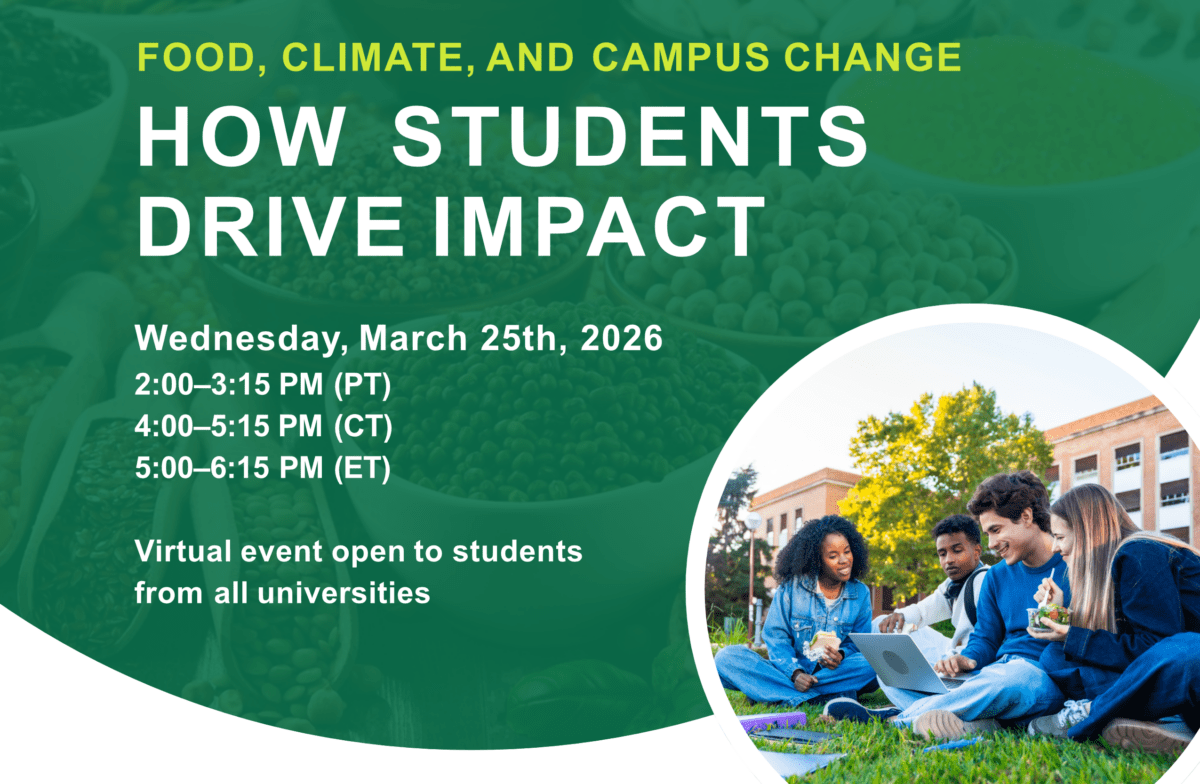
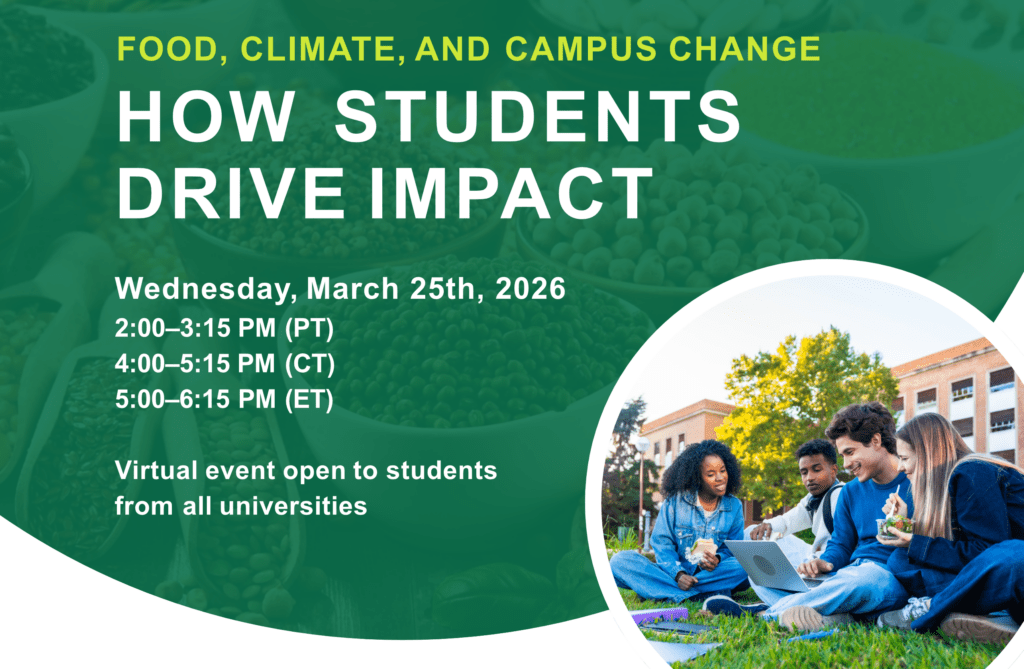
Free virtual event open to students from all universities
Food systems play a major role in climate change, biodiversity, and public health, yet they are often overlooked in sustainability discussions. This session will explore how food choices and institutional food policies connect to campus sustainability – and how students can help drive change.
Presented within a University of Winnipeg sustainability course and open to students from other universities, the session will feature experts, organizations, and student leaders sharing insights on the environmental and health impacts of food systems, the role of universities in shaping sustainable food environments, and emerging campus initiatives across Canada.
Representatives from Vancouver Humane Society, ReImagine Agriculture, the Plant-Based Cities Movement, and the Canadian University Initiative will share practical pathways for student engagement and campus action.
The session will conclude with a student Q&A and discussion.
The new 2025 Global Report from The Lancet Countdown offers a sobering look at climate impacts, finding that urgent climate action is needed to protect the planet and our health.
But it also lays out a clear path forward; one in which government action is crucial to mitigate and adapt to the worst impacts of a changing climate, and in which we each have the power to make change.
Public interest and engagement with health and climate change is at a record high, according to search data
Local action is shaping a healthier future for people and the planet
We can each make important changes that make a difference every time we sit down to eat.
What is the Lancet Countdown?
The Lancet Countdown is an international research collaboration bringing together more than 300 health professionals, scientists, and researchers from around the world. By monitoring data and advocating for policy change, they work to ensure health is at the centre of decision-makers’ understanding and response to climate change.
Each year, the Lancet Countdown releases a report outlining worldwide trends in climate and their impact on human health. The report also shares recommendations around the most impactful actions that can be taken to protect us from the impacts of climate change in the future.
Part of the report looks at the impact of our food system on both our personal health and the health of the planet.
By shifting to more plant-based foods and reducing our consumption of animal products, particularly those with the highest climate impacts and the most negative climate outcomes like red meat and dairy, the Lancet Countdown report shows we can become a healthier population and planet.
How does climate change impact our health?
The health of our planet directly and closely impacts the health of the individuals who live on it. The report focusses on the relationship between human health and climate change.
This is an issue that impacts everyone, but even moreso the most vulnerable people. The impacts of climate change disproportionately affect low HDI or Human Development Index, countries (countries with shorter average lifespans, lower education levels, and lower national income per capita) and less wealthy populations.
Transitioning to a more plant-forward food system means reducing emissions, mitigating climate change, and improving air and water quality, which have widespread impacts on public health.
Health impacts of rising temperatures
The report shares that the health threats of climate change have reached concerning, unprecedented levels, leading to millions of preventable deaths each year.
Between 2020 and 2024, an average of 84% of heat wave days people faced each year would not have occurred without climate change. Heat wave days can be especially dangerous and even fatal to people who are unable to access cool shelter, with massive widespread impacts in warmer countries close to the equator.
Heat-related mortality rates have risen by 63% since the 1990s. The annual average of heat-related deaths in 2012-2021 was more than half a million.
Hotter, drier conditions have led to an increase in wildfires, including unprecedented wildfire-driven tree losses in Canada. Sadly, an estimated 154,000 deaths were caused by wildfire smoke exposure in 2024.
Extreme weather events caused at least another 16,000 deaths in 2024. More than 3,700 of those deaths were from 26 of the most impactful extreme weather events which were found to have been made more likely or more intense by human-caused climate change.
Many sources of greenhouse gas emissions, including animal agriculture, also contribute to air pollution. Breathing in polluted air increases the risk of respiratory and cardiovascular diseases and other health problems.
In addition, 123.7 million more people faced moderate or severe food insecurity associated with more droughts and heat waves in 2023 compared to 1981-2010. Food insecurity increases the risk of all forms of malnutrition.
How can eating more plant-based foods protect the environment?
Producing foods that come from animals like meat, dairy, and eggs uses more resources than their plant-based counterparts. That’s because animals consume large amounts of plant calories to live and require space for growing feed crops and for raising and slaughtering the animals. By contrast, plant-based foods can be consumed by humans directly to meet our nutrient needs.
The vast majority of farmed animals on earth are farmed through intensive animal agriculture (also known as industrial animal agriculture or factory farming) to meet the high demand for animal products. Industrial animal agriculture poses particular concerns around animal welfare, environmental impacts such as pollution and feed production, and public health risks such as antibiotic resistance and zoonotic disease spread.
How eating more plants is part of a greener future
How much difference can my meals actually make? Find out in the last blog post.
According to the Lancet Countdown report, food systems are responsible for up to one third of all greenhouse gas emissions, with farmed animals being the primary source. 55% of food emissions come from producing red meat and dairy.
“As food systems become increasingly strained by environmental changes … dietary shifts towards less polluting, more resource-efficient foods and food production systems will be needed.” – 2025 report of the Lancet Countdown on health and climate change, page 28
Is eating plant-based foods good for our personal health?
In addition to being healthier for the environment, a large body of research shows plant-based foods have better health outcomes for our bodies.
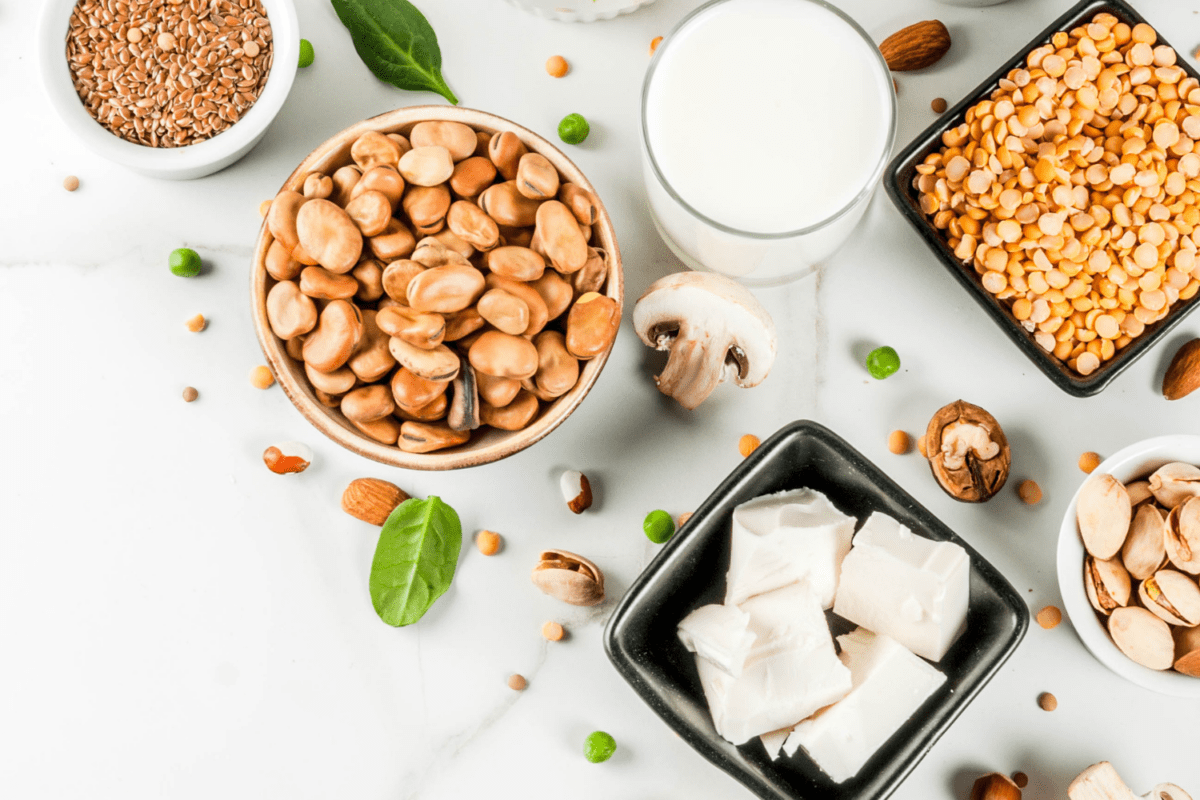
There is a broad consensus among health professionals and nutrition experts that we should be eating more plant-based, whole foods like vegetables, fruits, legumes, nuts, and seeds, while reducing intake of red and processed meats.
Find tasty ways to incorporate more plant ingredients into your diet with PlantUniversity’s recipe library:
The report notes that 1.9 million deaths were attributable to excessive red meat and dairy intake in 2022. The largest proportional increase in attributable deaths came from high meat consumption, with the most impacts from diet in high HDI countries.
“Red and processed meats are risk factors for non-communicable diseases, and excessive intake of animal-source foods also contributes to weight-related morbidity and mortality.” – 2025 report of the Lancet Countdown on health and climate change, page 28
Another detailed and reliable resource from the world-leading medical journal, The Lancet, is the EAT-Lancet commission. This Commission looks at healthy, sustainable, and just food systems, and presents new evidence-based insights on nutrition and human health.
Stay tuned for more information about the EAT-Lancet Commission and how we can make meaningful change through our food systems on a global, local, and individual level!
For years, many people thought animal protein (like beef or chicken) was a more bioavailable protein, making it superior for building muscle compared to plant protein (like beans or tofu). New research shows that’s not the case. If you eat enough protein, plant-based sources work just as well as animal sources for building muscle.
Surprisingly, these findings come from a recent study funded by the beef industry. The study’s design, possibly intended to help market beef as the healthier option, might have backfired as the findings contradicted the researchers’ expectations.
Watch the video below reviewing the research findings and implications for personal health and nutrition, or read on for a quick summary!
New research show that as long as you get the right amount of protein for your body weight, it doesn’t matter if it comes from plants or animals. Both can help build muscle, while plant-based foods have many other nutritional benefits.
Plant proteins like lentils, soy, and quinoa bring lots to the table:
Packed with good stuff: They come with fibre and antioxidants, which are great for aiding digestion and have been found to help prevent disease.
Healthier for your heart: Eating more plant-based foods can reduce your risk of chronic diseases such as heart disease, cancer, and diabetes.
Better for the planet: Growing plants for food uses less land and creates less pollution than raising, feeding, transporting, and slaughtering animals.
Better for animals: Choosing more plant-based foods reduces the demand for industrial animal agriculture, which causes serious harms to animals.
Plant-based for your health
Learn the nutritional benefits of plant-based eating!
Yes! Many plant-based foods contain all the essential amino acids, which are needed for the body to use the protein we consume.
Even though some plant proteins are missing certain essential amino acids, eating a mix of different plants solves this. For example, rice and beans together give you all the amino acids your body needs, making them a “complete protein”.
Examples of complete plant-based proteins:
Quinoa
Soy (such as tofu, tempeh, or edamame)
Buckwheat
Hemp seeds
Chia seeds
Rice and beans
Pita and hummus
Peanut butter and whole wheat bread
Bean chili and crackers
Lentils and brown rice
Nutritional yeast
Chat with a vegan body builder
Hear from Ravi Bohgan, an entrepreneur, app developer, body builder, and supercar enthusiast who is passionate about plant-based eating.
Hear from Derek Simnett, a Certified Nutritional Practitioner, athlete, and star of the YouTube channel Simnett Nutrition, where he talks about how to live a healthful vegan life.
A growing body of evidence is proving that choosing plant-based foods more often can have great benefits. The vast majority of nutrition experts have reached a consensus that eating a wide variety of whole plant-based foods is good for your health, and it’s a good idea to limit red meat intake.
As more studies demonstrate the benefits of plant-based eating, expert advice continues to evolve. Watch this video in which a doctor who previously claimed that animal protein was superior to plant protein changes his views due to compelling new evidence:
If you want to build muscle, stay healthy, and help the planet, eating plant proteins is a great choice. Enjoy foods like tofu, beans, nuts, and lentils. They’re not just “good enough”—they’re amazing!
Discover plant-based recipes
Check out Plant University’s recipe library for tons of delicious recipes to get you started on your plant-based journey.
✅ POST a video or photo on either TikTok or Instagram of you making, presenting, or taste testing a recipe from plantuniversity.ca. Be sure to tag #PlantUniversity.
A new study released shows that one simple change in institutions can make a big impact.
The study was conducted by Food for Climate League and in partnership with Better Food Foundation, Sodexo, and Boston College. It sought to determine the impact of serving plant-based meals as the “default” at Tulane University, Rensselaer Polytechnic Institute, and Lehigh University.
Making plant-based meals the default refers to individuals being served the plant-based meal automatically and having to ask for an animal-based option, instead of the other way around. This strategy helps nudge behavioural change and reduce greenhouse gas emissions, while still providing consumers choice and keeping consumer satisfaction.
Key findings from the study:
24% reduction in greenhouse gas emissions per day
The number of plant-based options served increased from 30% – 81.5%
With over 235 million university students worldwide who consume around 148 billion meals per year, these results show that a plant-based default can have a huge impact on achieving sustainability goals.
Making plant-based dishes the default has been shown to be an effective strategy for widespread behaviour change across schools and also other institutions. Another study found that when plant-based is the default instead of part of a separate menu, individuals are 56% more likely to choose that option. For example, in New York City hospitals where plant-based is the default, over 50% of eligible patients are choosing the plant-based option.
“Having plant-based foods isn’t a buzz or trend, it’s a need and demand that we deliver with creativity and flavour,”
said Brett Ladd, CEO for the Sodexo US Campus Division.
Interested in introducing or expanding plant-based menu options at your school, workplace, business or in your community? Learn more about supports we can provide and get in touch!
VANCOUVER, May 30, 2023 – Switching to a plant-based diet could save you around 14% at the till, says a report released today by the Vancouver Humane Society (VHS). The report details how eating more plant-based foods can help individuals in British Columbia’s Lower Mainland to cut down on grocery costs, reduce emissions, and save animal lives.
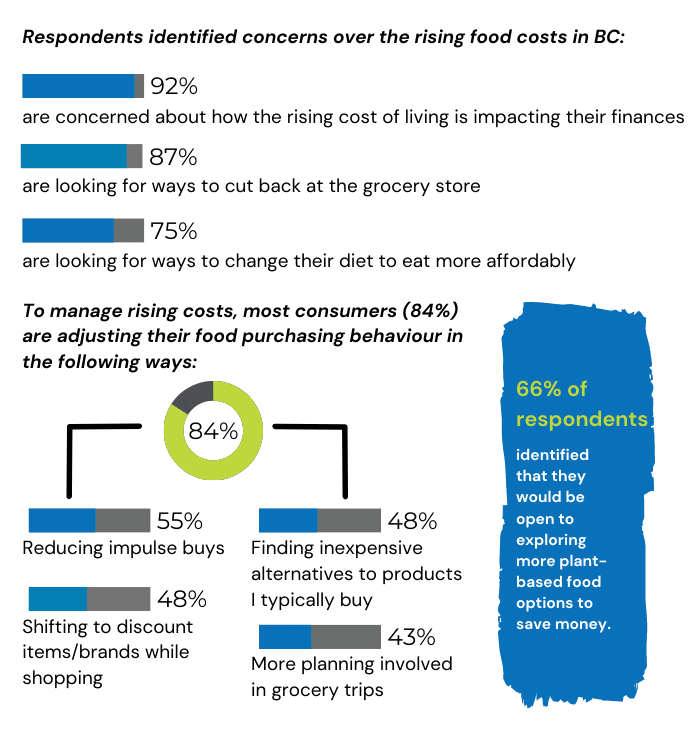
These findings follow the release of a poll commissioned by the VHS, which found that 92% of Lower Mainland residents are concerned about how the rising cost of living is impacting their finances and 66% would be open to eating more plant-based foods to save money. Food costs have skyrocketed over the past year, increasing by more than double the overall annual inflation rate at about 10%, and are expected to rise by 5 to 7% this year according to Canada’s Food Price Report 2023.
Image: Vancouver Humane Society, A Transition Toward Plant-Based Diets: A study amongst BC residents in the Lower Mainland
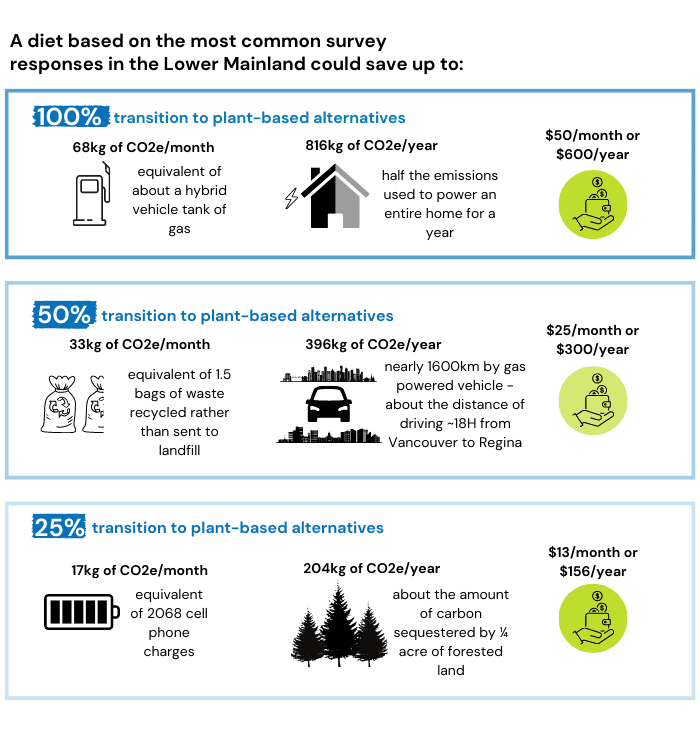
By making the swap to plant-based alternatives, the average person could save $50 each month on groceries. That’s about 14% of the typical monthly cost of groceries for a person living in Vancouver, which was $355.28 last year. The savings are greatest when swapping out animal products for whole foods – for instance, switching from chicken to tofu rather than to manufactured meat alternatives.
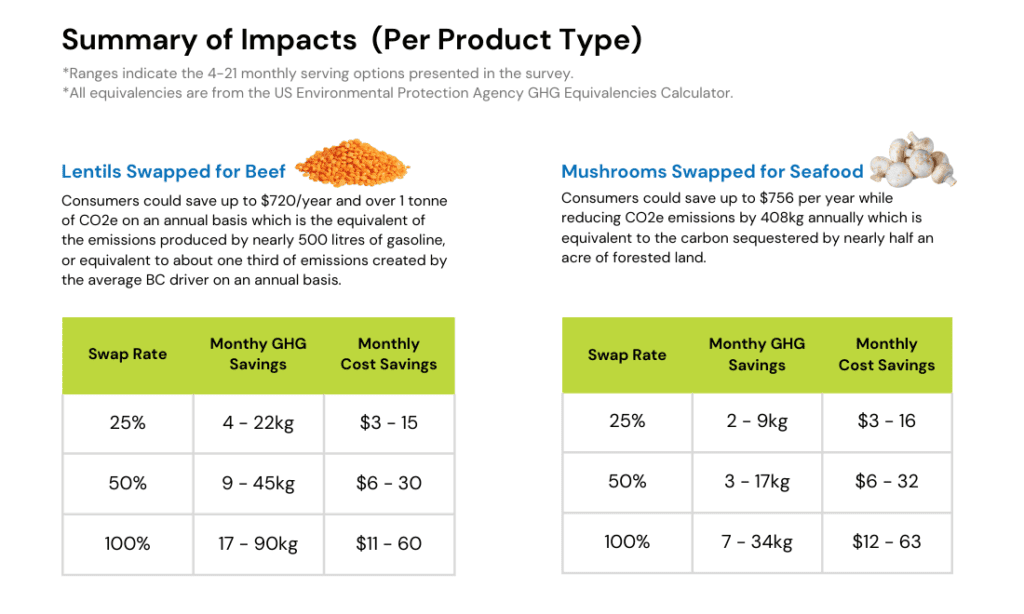
Individuals who eat a lot of beef and seafood could see even higher savings. Swapping 21 servings of beef for lentils each month could save $60, while swapping 21 servings of seafood for mushrooms could save a whopping $64 monthly.
Image: Vancouver Humane Society, A Transition Toward Plant-Based Diets: A study amongst BC residents in the Lower Mainland
In addition to cost savings, eating a plant-based diet could reduce an individual’s carbon footprint by 816kg of carbon dioxide equivalents (CO2e) annually – about half of what it takes to power an entire home for a year.
Image: Vancouver Humane Society, A Transition Toward Plant-Based Diets: A study amongst BC residents in the Lower Mainland
A switch away from beef carries the greatest environmental impact – in the typical Lower Mainland diet, swapping beef for lentils reduces greenhouse gas emissions by nearly twice as much as swapping out all other animal products combined.
In 2020, a similar report from the VHS entitled “Increasing Plant-Based Purchasing at the Municipal Level” outlined the benefits of shifting toward more plant-based foods purchased by the City of Vancouver, including through catering, city-run concession stands, and municipal food funding. That report found by replacing 20% of animal-based food products with plant-based alternatives, the City of Vancouver could save up to $99,000 and reduce greenhouse gas emissions by more than 500 tonnes. In 2021, the Vancouver City Council unanimously passed a motion to explore policy recommendations outlined in the report.
– ends –
SOURCE Vancouver Humane Society
For more information, contact Chantelle Archambault: 604-416-2903, chantelle@vancouverhumanesociety.bc.ca
Polling data from the Lower Mainland shows a plant-forward future is on the horizon
VANCOUVER, April 18, 2023 – Younger generations in B.C.’s Lower Mainland are increasingly shifting their diets toward plant-based foods, new polling data reveals.
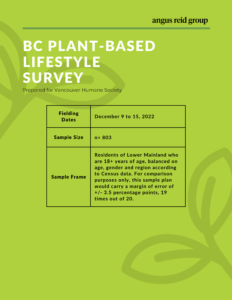
The research poll, commissioned by the Vancouver Humane Society (VHS), examines the dietary preferences and opinions around plant-based eating of Lower Mainland residents. The study was conducted among a representative sample of 803 Lower Mainland residents aged 18+ who are members of the Angus Reid Forum.
Responses reveal a trend away from meat and animal products with each passing generation: vegans and vegetarians comprised 10% of respondents aged 18-34, 9% of respondents aged 35-54, and 6% of respondents aged 55+.
A similar trend can be found when looking at respondents’ reduction of animal-based products. 69% of respondents aged 18-34 had reduced their animal product consumption, compared to 66% of respondents aged 35-54 and 60% of respondents aged 55+.
In addition to vegans and vegetarians, more respondents in the youngest generation identified their diet as “flexitarian” – primarily eating plant-based foods with occasional consumption of animal-based products. 7% of respondents aged 18-34, and 5% of both other age groups surveyed identified as flexitarian.
“The increasing availability of plant-based foods and the growing popularity of plant-based diets are mutually reinforcing,” said VHS Communications Director Chantelle Archambault. “Public demand for tasty animal-free options is driving a huge shift in the industry, which in turn makes it easier than ever for more people to put plant-forward meals on their plates.”
Interestingly, motivations for shifting toward a plant-based diet varied by generation. Respondents aged 18-34 identified both economic reasons and environmental concerns as the top factors influencing their decision to consume fewer animal products, while other age demographics were most motivated by personal health.
When considering how and what to eat overall, every age group was most motivated by taste. Archambault says this is also a hopeful sign for the future.
“As the food industry continues to develop innovative tastes and textures for plant-based products, we’re sure to see a wider shift toward a society that eats more sustainably.”
For those looking to add more plants into their diets, the VHS offers free resources and recipes on their Plant University website.
Nearly 3 in 4 British Columbians believe menus with plant-based options are “more inclusive”: research
VANCOUVER, April 13, 2023 – The majority of British Columbians in the Lower Mainland have positive feelings about plant-based menu options, new polling data reveals.
The research poll, commissioned by the Vancouver Humane Society (VHS) among a representative sample of Lower Mainland residents from the Angus Reid Forum, asked participants about their dietary preferences and attitudes around plant-based eating.
73% of respondents agreed that “Food services that offer a greater variety of plant-based options are more inclusive to all”. This sentiment was shared by a majority of people regardless of their own dietary preferences; 95% of vegans or vegetarians and 71% of people following other diets agreed with the statement.
The poll results demonstrate that the demand for plant-based options is growing, with 65% of respondents having reduced their consumption of animal products.
Differences between age demographics indicate a growing shift toward plant-based foods over each generation – 69% of respondents aged 18-34 had reduced their animal product consumption, compared to 66% of respondents aged 35-54 and 60% of respondents aged 55+.
“A growing number of consumers are reducing or eliminating animal-based products, with more people turning to plant-based options when they are available,” said VHS Communications Director Chantelle Archambault.
Businesses and organizations are already moving to meet the growing demand for plant-forward foods. Many institutions that now offer plant-based menu items, such as Panago Pizza and the University of British Columbia (UBC), cite sustainability commitments as one motivation for the shift.
“There are so many great reasons to shift towards a more plant-based diet but for us at UBC Food Services we have done this to support the health of our students and the planet,” said David Speight, Executive Chef and Culinary Director of UBC Food Services. “We know that plant-based diets can provide excellent health benefits for our students and they reduce the negative environmental impacts on our planet compared to more animal protein centric diets.”
Other local businesses and institutions are stepping up to meet consumer demand as well. Last year, the City of Vancouver committed to exploring a 20% reduction in animal-based products in favour of plant-based foods in their municipal food purchasing, such as through catering and city-owned concessions.
The new polling data suggests that this growing movement toward accessible, affordable, and tasty plant-based options could prompt a greater dietary shift in the future. 65% of respondents identified that they “would eat more plant-based meals if there were more tasty options available when going out to eat”.
Speight added, “We have shifted a large percentage of our menu offerings to plant-based and our students are still asking for more. It shows a real hunger for great tasting plant-based offerings.”
“With the public increasingly interested in plant-forward food items and calling for corporate responsibility, we’re eager to see more businesses and organizations introduce plant-based options in the coming years to avoid being left behind,” said Archambault.
This shift has the important added benefit of reducing the number of animals suffering for human food production.
The VHS is offering free support to B.C.-based institutions, such as restaurants, long-term care homes, and schools, that are interesting in introducing more plant-based menu items.
Plant-based eating has moved into the mainstream in recent years, as demonstrated by a 2018 national survey conducted by Dalhousie University which found British Columbia is leading the dietary revolution. The survey found that nearly 40 per cent of British Columbians 35 and under say they follow a vegan or vegetarian diet.
In North America, a growing number of schools, hospitals, food service providers, businesses and municipalities are recognizing and acting on the collective impact of our food choices, and as a result are embracing the plant-based movement.
At least 16 U.S. cities and counties have included meat-reduction efforts in their climate change mitigation strategies. For example, Santa Monica, California’s climate action plan commits the municipality to reducing meat and dairy purchases by 15% and Portland, Oregon’s climate action plan commits to increasing institutional purchases of healthy, climate-friendly food at public meetings, events, and in government facilities.
Also in the U.S., Chartwells and Morrison Health Care committed to shifting 20% of menu offerings to plant-based by 2020; the University of Guelph in Ontario is working to replace 20% of meat protein with plant-based proteins; and Western University in Ontario is aiming for 55% of menu options to be based on plant proteins.
Metro Vancouver has seen amazing progress in recent months. In November 2021, citing a report from the Vancouver Humane Society, the City of Vancouver unanimously passed a motion to shift 20% of animal-based purchasing to plant-based. The District of North Vancouver passed another plant-forward motion in March citing the same report.
Amaga Food, a North Vancouver food service provider for several secondary schools, has also committed to transitioning 20% of menu offerings to plant-based. To date, 16 secondary and post-secondary schools throughout Metro Vancouver have also worked to increase their plant-based offerings through initiatives like Meatless Monday.
Share the plant-based movement!
Find tools and tips to advocate for more plant-based options in your area here.









































Leave a Reply